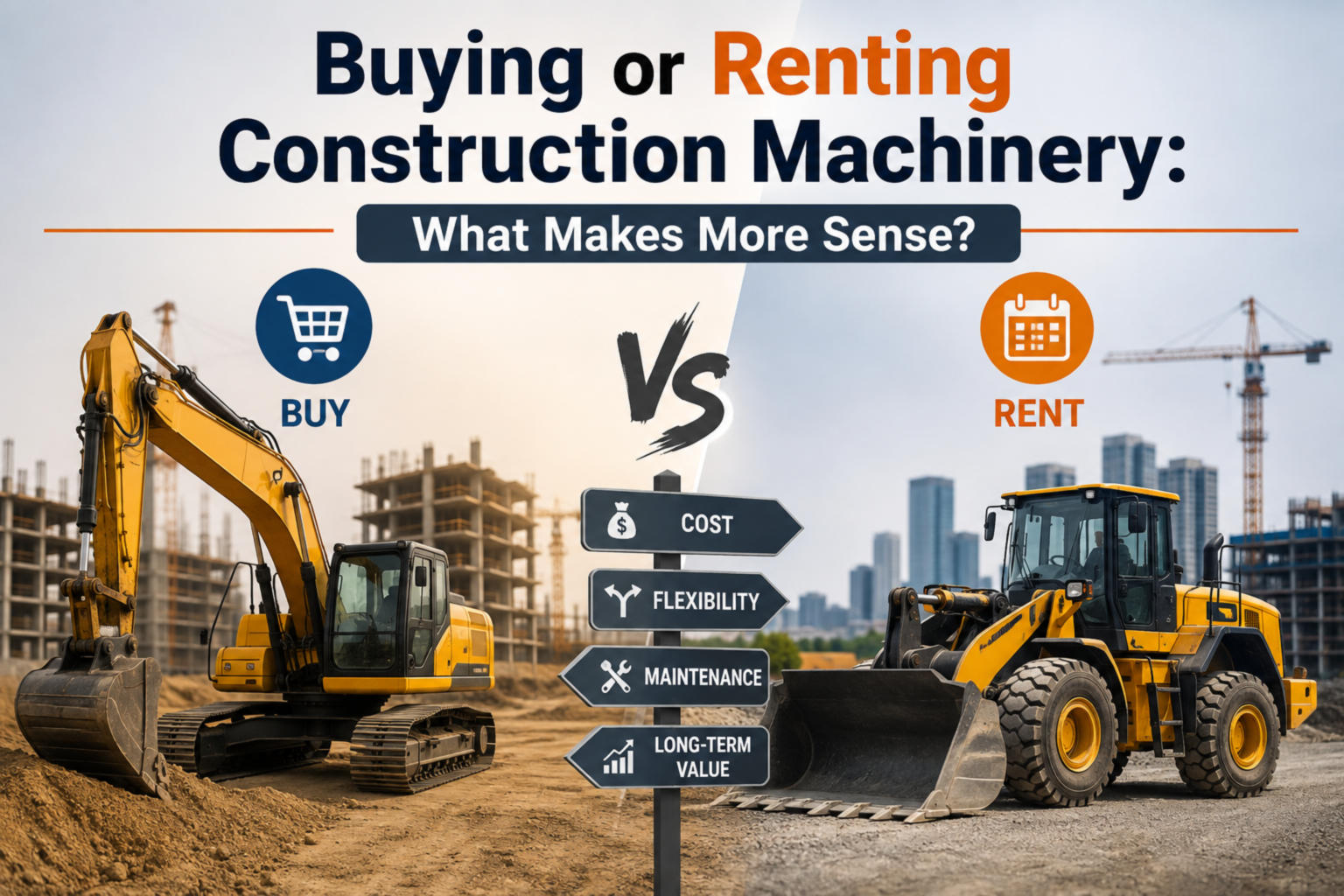
Construction machinery is a major expense for contractors, builders, and construction companies. Whether you need an excavator, loader, crane, bulldozer, or backhoe, one common question is: Should you buy or rent construction equipment?
Both options have benefits. Buying gives you full ownership, while renting offers flexibility and lower upfront costs. The right choice depends on your budget, project duration, equipment usage, and future needs.
1. How Often Will You Use the Equipment?
Frequency of use is one of the biggest factors.
Buying may make sense if:
- You use the machine regularly
- You have long-term projects
- The equipment is needed across multiple sites
- You expect to use it for several years
Renting is usually better for short-term or occasional use.
2. Compare Upfront Costs
Buying construction machinery requires a large initial investment. You may also need to pay for insurance, financing, registration, and transportation.
Renting usually requires less money upfront.
Benefits of renting include:
- Lower initial cost
- Better cash flow
- No large equipment loan
- Easier project budgeting
For smaller construction companies, renting can provide access to quality machinery without a major financial commitment.
3. Maintenance and Repair Costs
Owning equipment means you are responsible for maintenance and repairs.
These costs may include:
- Routine servicing
- Replacement parts
- Oil and filter changes
- Tyres or tracks
- Unexpected repairs
With construction equipment rental, much of the maintenance is usually handled by the rental company.
This can save time and reduce operational costs.
4. Consider Project Duration
Project length should also influence your decision.
Renting is often more practical for projects lasting only a few days or weeks. You can use the equipment when needed and return it when the job is complete.
Buying may be more cost-effective for long-term projects because repeated rental payments can become expensive over time.
5. Flexibility of Renting
Different projects often require different machines.
Renting allows you to choose equipment based on each project without buying a large fleet.
For example, you may need:
- Excavators
- Cranes
- Loaders
- Forklifts
- Compactors
This makes renting a flexible choice for companies with changing equipment needs.
6. Long-Term Value of Buying
Buying equipment can provide better long-term value if the machine is used regularly.
Benefits include:
- Full ownership
- Unlimited usage
- Better availability
- Potential resale value
- More control over equipment condition
However, owners must also consider depreciation, maintenance, storage, and insurance.
Buying vs Renting: Which Is Better?
Buying is better when:
- Equipment is used frequently
- You have consistent projects
- You can manage maintenance
- You want long-term ownership
Renting is better when:
- Projects are short-term
- Equipment needs change
- You want lower upfront costs
- You want less maintenance responsibility
FAQs
Is it cheaper to buy or rent construction equipment?
Renting is usually cheaper for short-term use, while buying may offer better value for frequent, long-term use.
What is the main benefit of renting construction machinery?
The biggest benefits are lower upfront costs, flexibility, and reduced maintenance responsibility.
Can construction companies use both buying and renting?
Yes. Many companies own frequently used machinery and rent specialized equipment when required.